In a monopsony market, a single buyer is the main purchaser of goods and services offered by many sellers. Since there is one buyer and many sellers, the buyer has significant control over the market, and in some cases, prices are decided by the buyer rather than the sellers.
Monopsony power generally exists in the factor market, the market for production services, which includes labor, capital, land, and raw material used to make products.
Main characteristics of a monopsony market
- A buyer’s monopoly is possible because sellers have no alternative buyers to sell their services. A classic example is a coal-mining town. A company that owns the coal mine (employer or buyer) can set lower wages for a worker in mines (seller of skills) because they face no competition from other employers in hiring the worker.
- A monopsony, or buyer's monopoly, has high barriers to entry, because of high start-up costs and because established buyers enjoy lower average costs than newcomers could.
- Firms with monopsony power can earn above-normal profits and take a large share of the total gain, at the cost of low wages and poor working conditions.
Example of Monopsony Market
Supermarket chains like Walmart or Tesco have greater purchasing power and often negotiate with suppliers to buy at lower prices. Suppliers such as farmers or milk producers often have few other buyers and have to accept the terms. Buying cheaply from suppliers and selling at a good margin to shoppers helps these chains earn strong profits and gain market share.
Key terms
- Market share
- Market share represents the percentage of an industry, or a market's total sales, that is earned by a particular company over a specified time period.
Common questions
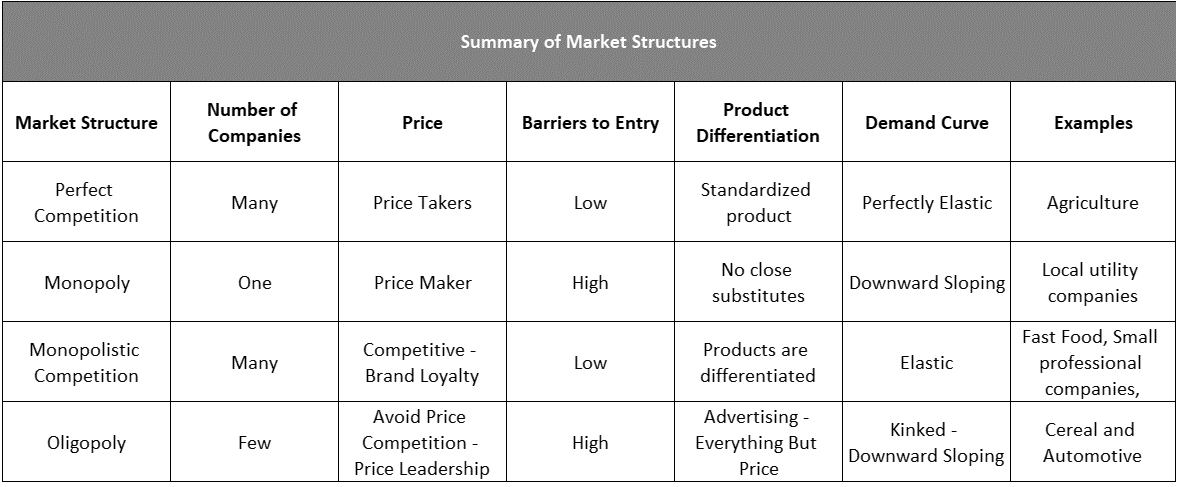
How does monopolistic competition work?
Monopolistic competition is a market in which many sellers offer similar products, but each seller's product differs in some way from the others in the minds of consumers.
So each seller is a monopolist of its own differentiated product: buyers can get that particular product only from that seller. However, many close substitutes are available.
Shoppers therefore compare both prices and perceived quality, and sellers compete for market share. As you can see, in this market structure, a set of companies compete against one another while maintaining monopolies over their own products.