


Boats and Streams in arithmetic
Let the speed of a boat in still water be:

Let the speed of the stream be:

When the boat moves along the stream, it is called downstream.
Downstream speed:

When the boat moves against the stream, it is called upstream.
Upstream speed:

Important Formulas
If a man rows in still water at and the rate of current or stream is , then:
Rate with current:
Rate against current:
If downstream speed and upstream speed are given, then:
Speed in still water:

Rate of current:

Problem 18: Downstream and Upstream Speeds
A man can row downstream at the rate of 14 km/hr and upstream at the rate of 5 km/hr. We need to find the man’s rate in still water and the rate of current.
Let speed in still water be:

Let speed of current be:

Given:


Adding both equations:


Subtracting the equations:


Therefore:
Speed in still water = 9.5 km/hr
Rate of current = 4.5 km/hr
Problem 19: Upstream and Downstream Distances
A man rows upstream 16 km and downstream 27 km, taking 5 hours each time. We need to find the velocity of the current.
Downstream speed:

Upstream speed:

Let speed in still water be:
Let speed of current be:
So:


Subtracting:
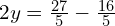


Therefore, velocity of current = 1.1 km/hr.
Problem 20: Upstream Takes Twice the Downstream Time
A man can row 4.5 km/hr in still water. He finds that it takes him twice as long to row up as to row down the river. We need to find the rate of the stream.
Let speed in still water be:

Let speed of stream be:
Downstream speed:

Upstream speed:

For the same distance, time is inversely proportional to speed.
Since upstream time is twice downstream time:

Substitute  :
:




Therefore, the rate of stream is 1.5 km/hr.
Problem 21: Distance to a Place and Back
A man can row 5 km/hr in still water. The river is running at 1.5 km/hr. It takes him 1 hour to row to a place and back. We need to find how far the place is.
Let the required distance be:

Speed downstream:

Speed upstream:

Total time to go and return is 1 hour.
So:
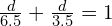
Convert:


So:
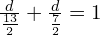
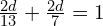

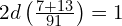
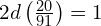



Therefore, the place is 2.275 km away.
Problem 22: Motor Boat Upstream and Back
The current of a stream runs at the rate of 2 km/hr. A motor boat goes 10 km upstream and back again to the starting point in 55 minutes. We need to find the speed of the motor boat in still water.
Let speed of boat in still water be:
Speed of current:

Upstream speed:

Downstream speed:

Total time:

Distance upstream = 10 km.
Distance downstream = 10 km.
So:

Taking 10 common:
![10\left[\frac{1}{x - 2} + \frac{1}{x + 2}\right] = \frac{11}{12}](https://expresswala.in/wp-content/ql-cache/quicklatex.com-5cda2ea7cfbad9a8c16857c50f00d720_l3.png "Rendered by QuickLaTeX.com")
![10\left[\frac{x + 2 + x - 2}{(x - 2)(x + 2)}\right] = \frac{11}{12}](https://expresswala.in/wp-content/ql-cache/quicklatex.com-fa9db98a5ed2fd25065625c94a758a72_l3.png "Rendered by QuickLaTeX.com")
![10\left[\frac{2x}{x^2 - 4}\right] = \frac{11}{12}](https://expresswala.in/wp-content/ql-cache/quicklatex.com-6545504ec80ddff89e7964745202f832_l3.png "Rendered by QuickLaTeX.com")

Cross multiplying:


Solving gives:

Therefore, the speed of the motor boat in still water is 22 km/hr.
Problem 23: Two Journeys Upstream and Downstream
A man can row 30 km upstream and 44 km downstream in 10 hours. He can also row 40 km upstream and 55 km downstream in 13 hours. We need to find the rate of the current and the speed of the man in still water.
Let speed in still water be:
Let speed of current be:
Upstream speed:
Downstream speed:
Let:


From the first condition:

From the second condition:

Multiply the first equation by 4:

Multiply the second equation by 3:

Subtracting:


Now substitute in the first equation:




Since:
So:
And:
So:

Adding:


Subtracting:


Therefore:
Speed in still water = 8 km/hr
Rate of current = 3 km/hr
Building strong maths foundations in Vijayawada, from Grade 2 to Intermediate and competitive exams.
Follow us
About us
Expresswala Academy is a Vijayawada-based maths coaching institute serving students from Grade 2 through Intermediate (MPC) and competitive exam aspirants (EAPCET, IIT-JEE). Led by Ravindra Reddy K, we focus on concept clarity, consistent practice, and measurable progress.
Course
Useful Links
Contact us