No products in the cart.
Welcome to Expresswala Academy. If you have just started your journey in business school, you might be wondering why Managerial Economics for MBA is often the very first module you encounter. Is it just about graphs and complex formulas? Not at all.
As a faculty member with over a decade of experience teaching in Indian B-schools, I can tell you that Managerial Economics is the bridge between economic theory and practical business strategy. It provides the logic behind every major decision a manager makes. In this guide, we will break down the essentials of Managerial Economics for MBA students to help you excel in your exams and your future corporate role.
Why Managerial Economics is the Backbone of Business
Economics deals with scarce resources, while management deals with decision-making. When you combine them, you get a powerful toolset for solving business problems. Managerial Economics for MBA courses are designed to teach you how to optimize profits, minimize costs, and analyze market trends scientifically.
Whether you are aiming for a role in consulting, marketing, or finance, the logic learned here applies everywhere. It moves you from “gut feeling” decisions to data-driven strategies.
Core Concepts Every MBA Student Must Know
To master Managerial Economics for MBA, you need to focus on four pillars. Let’s look at them with real-world Indian examples.
1. Demand Analysis and Forecasting
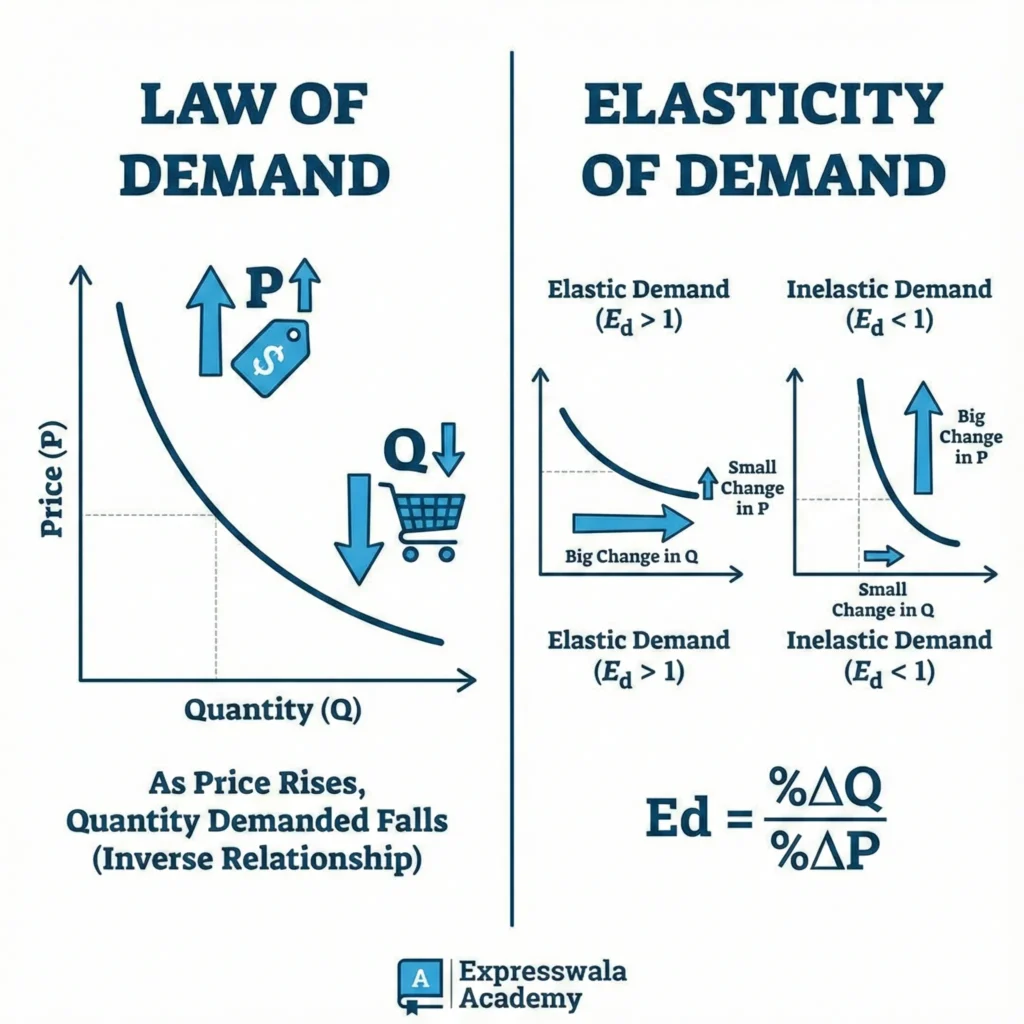
Demand is the lifeblood of any business. It involves understanding what consumers want and how much they are willing to pay.
- The Concept: It helps in predicting future sales based on price changes, income levels, and competitor actions.
- Indian Example: Consider the Indian wedding season. Jewelry brands like Tanishq use demand forecasting to stock up on gold inventory months in advance, knowing that demand becomes inelastic (people buy regardless of price) during the wedding season.
2. Production and Cost Analysis
Once you know the demand, you must produce efficiently. This section of Managerial Economics for MBA focuses on the relationship between input (labor, raw material) and output.
- The Concept: How do you minimize costs while maximizing output?
- Indian Example: Companies like Maruti Suzuki have mastered economies of scale. By producing cars in massive volumes, they reduce the per-unit cost, allowing them to sell vehicles at a price point that dominates the Indian market.
3. Pricing Decisions and Strategies
This is often the most exciting part of the curriculum. Pricing isn’t just about covering costs; it is about capturing value.
- The Concept: Understanding market structures (Monopoly, Oligopoly, Perfect Competition) to set the right price.
- Indian Example: Reliance Jio’s entry into the telecom market is a classic case study. They used “Penetration Pricing” offering services for free or at very low rates to capture a massive market share from competitors like Airtel and Vodafone.
Why You Need Managerial Economics for MBA Success
Many students find the quantitative aspect of this subject challenging, but the payoff is immense.
- Exam Scoring: Unlike theoretical subjects, Managerial Economics for MBA papers often have clear, mathematical answers. If your concepts are clear, it is a high-scoring subject that can boost your overall GPA.
- Placement Interviews: Recruiters love asking guesstimates and case studies. Understanding elasticity and cost structures gives you the framework to answer questions like “Estimate the demand for electric scooters in Bangalore” with logic and precision.
Conclusion
Managerial Economics is not just a subject to pass in your first semester; it is a mindset to adopt for your career. By mastering Managerial Economics for MBA, you equip yourself with the analytical tools to navigate complex business environments, from pricing strategies to cost optimization.
At Expresswala Academy, we believe that every student has the potential to be a top-tier manager. If you are finding concepts like elasticity or game theory difficult, don’t worry—we are here to simplify them for you.
Ready to top your semester exams? Explore our detailed MBA video courses and notes at Expresswala Academy today!